



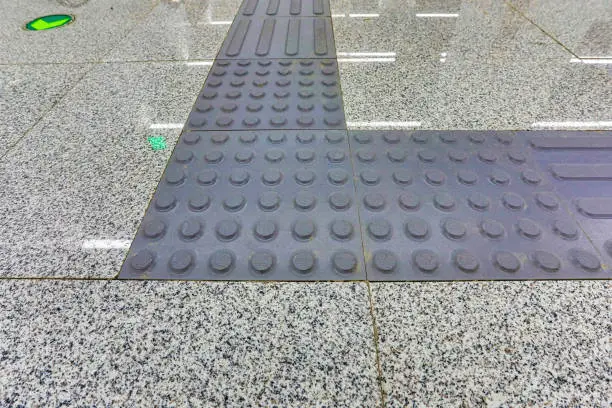
Slips and trips account for 32% of all workplace injuries in the UK. In domestic settings, they’re one of the most common causes of serious accidents, particularly in bathrooms and kitchens where water on a floor is just part of daily life. Most of those accidents are preventable. And the prevention usually starts with a tile choice that was either made correctly or wasn’t thought about at all.
Anti slip tiles have changed significantly in recent years. The old assumption that safety and style were in direct conflict has been dismantled by advances in surface technology. What’s available now is genuinely different from the rough, sandpaper-textured tiles that put people off the category for years.
The Ratings System Explained Simply
There are two main systems for measuring slip resistance on tiles in the UK and they’re both worth understanding before you buy anything.
The R rating comes from a German ramp test. An operator walks on an oil-coated surface that’s slowly tilted, and the angle at which slipping occurs determines the rating. The scale runs from R9 through to R13. R9 offers basic resistance and suits dry internal spaces like living rooms and dining areas. R10 provides moderate resistance and works well in hallways and kitchens. R11 handles wet areas including bathrooms, shower rooms, and wet rooms. R12 and R13 step up to commercial kitchens, pool surrounds, and industrial environments where conditions are significantly more demanding.
The Pendulum Test Value is the UK Health and Safety Executive’s preferred method. A swinging arm with a rubber slider replicates a heel strike on the tile surface. The more friction the tile offers, the lower the slip risk. PTV scores below 24 carry high slip potential. Between 25 and 35 is moderate. A PTV of 36 or above meets UK safety standards for most applications, and 40 or above is the more robust target for areas that regularly get wet.
For residential bathrooms and shower trays, R10 is the absolute minimum. R11 is a better specification and the one worth aiming for. It provides meaningful grip underfoot without compromising on the appearance of the tile.
The Texture Revolution Nobody Talks About
Here’s what’s changed most dramatically in recent years. Anti slip tiles used to be obviously textured. You could see it and feel it, and it read as a purely functional choice that sacrificed aesthetics for safety. That trade-off no longer exists.
Modern anti slip porcelain uses micro-texture and innovative glazing technology to create friction where it matters without any visible surface disruption. R11-rated tiles are now available in high-gloss, satin, and marble-effect finishes. You can have a surface that looks like polished stone, reads as genuinely luxurious, and still provides proper grip when a wet foot lands on it. The two things used to be mutually exclusive. They’re not anymore.
This development matters because it removes the excuse that’s stopped a lot of people from specifying anti slip tiles properly. The aesthetics are there. The safety is there. There’s no longer a genuine reason to choose a beautiful tile that isn’t safe over a beautiful tile that is.
What Each Rating Actually Means for Your Home
Dry living rooms, dining rooms, and bedrooms where water is rarely present can comfortably use R9 tiles. The grip requirement is low and the priority is finish and aesthetic.
Kitchens and hallways sit in R10 territory. Kitchens get wet regularly from cooking, cleaning, and the general chaos of family life. Hallways take wet feet and damp shoes. R10 provides meaningful grip without the surface texture that might feel wrong underfoot in a frequently used domestic space.
Bathrooms, wet rooms, and shower trays need R11 as a minimum. This is non-negotiable for anywhere that’s regularly covered in water. The grip difference between an R9 and an R11 tile on a wet surface is significant and it’s the difference that matters when someone steps out of a shower with wet feet.
External areas, terraces, and outdoor spaces step up further still. R11 handles most external residential applications. Anything adjacent to a pool, spa, or water feature warrants R12 or above, and the PTV rating should be confirmed alongside the R rating for any external specification.
Large Format Tiles Work Well for Anti Slip
One thing that surprises people is that large-format anti slip tiles are now widely available and actually offer a practical advantage. Fewer grout lines across a floor means less surface variation to navigate and a more continuous, predictable surface underfoot. The micro-texture on the tile face provides the grip. The reduced number of joints provides the visual continuity that makes rooms feel larger.
Stone-effect and concrete-look porcelain in large formats at 80 by 80 centimetres or 100 by 100 centimetres deliver this combination particularly well. They look considered and contemporary, they perform safely in wet conditions, and they’re significantly easier to clean than smaller tiles with more frequent grout lines.
Mosaic Tiles Do a Specific Job in Shower Trays
The one application where mosaic tiles still hold a clear practical advantage is the shower tray. Their small format creates a high ratio of grout to tile surface across the floor, which naturally increases grip underfoot. The grout itself provides friction at regular intervals. For curved shower trays and irregular base shapes, mosaics also follow the contours more cleanly than larger formats.
The limitation is cleaning. More grout lines mean more surface for soap scum and limescale to accumulate. It’s a genuine trade-off. For most shower trays, the safety argument for mosaics is strong enough to make the cleaning commitment worthwhile, particularly in family bathrooms with children.
Installation Makes a Difference to Performance
A tile’s anti slip rating is tested under controlled conditions with the surface properly laid and grouted. A poorly installed tile doesn’t perform to its rated specification. Lippage between tiles, uneven grout lines, and incorrect adhesive selection all affect how the surface behaves underfoot and how well it cleans.
Any floor that’s going to be regularly wet needs to be laid with the correct fall towards drainage. A flat floor with no drainage pitch collects standing water and reduces the effective grip of even well-rated tiles. This is worth confirming with your tiler before installation rather than after.
Anti slip tiles specified correctly and installed properly don’t need to be maintained differently from any other tile. Regular cleaning with a pH-neutral cleaner keeps the surface clear and performing correctly. What degrades anti slip performance over time is a build-up of soap residue or limescale that fills the micro-texture responsible for grip. Keep the surface clean and the safety characteristics hold up for decades.
