


Networking has changed significantly. A professional introduction no longer ends when two people exchange a name, phone number, and company address. Today, people also want to share LinkedIn profiles, websites, portfolios, booking links, social channels, videos, and other digital information.
That is where digital business cards have become especially useful.
Yes, digital business cards are worth it for many modern professionals. They make it faster to share contact information, allow details to be updated without printing new cards, support richer digital profiles, and can create a smoother follow-up process after meetings, events, sales conversations, and everyday networking.
They are particularly useful for professionals who network frequently, attend events, meet customers face-to-face, manage changing contact information, or simply want a more modern way to make connections.
But what exactly makes a digital card different from a traditional business card, and when does it provide the most value?
Let’s take a closer look.
What Is a Digital Business Card?
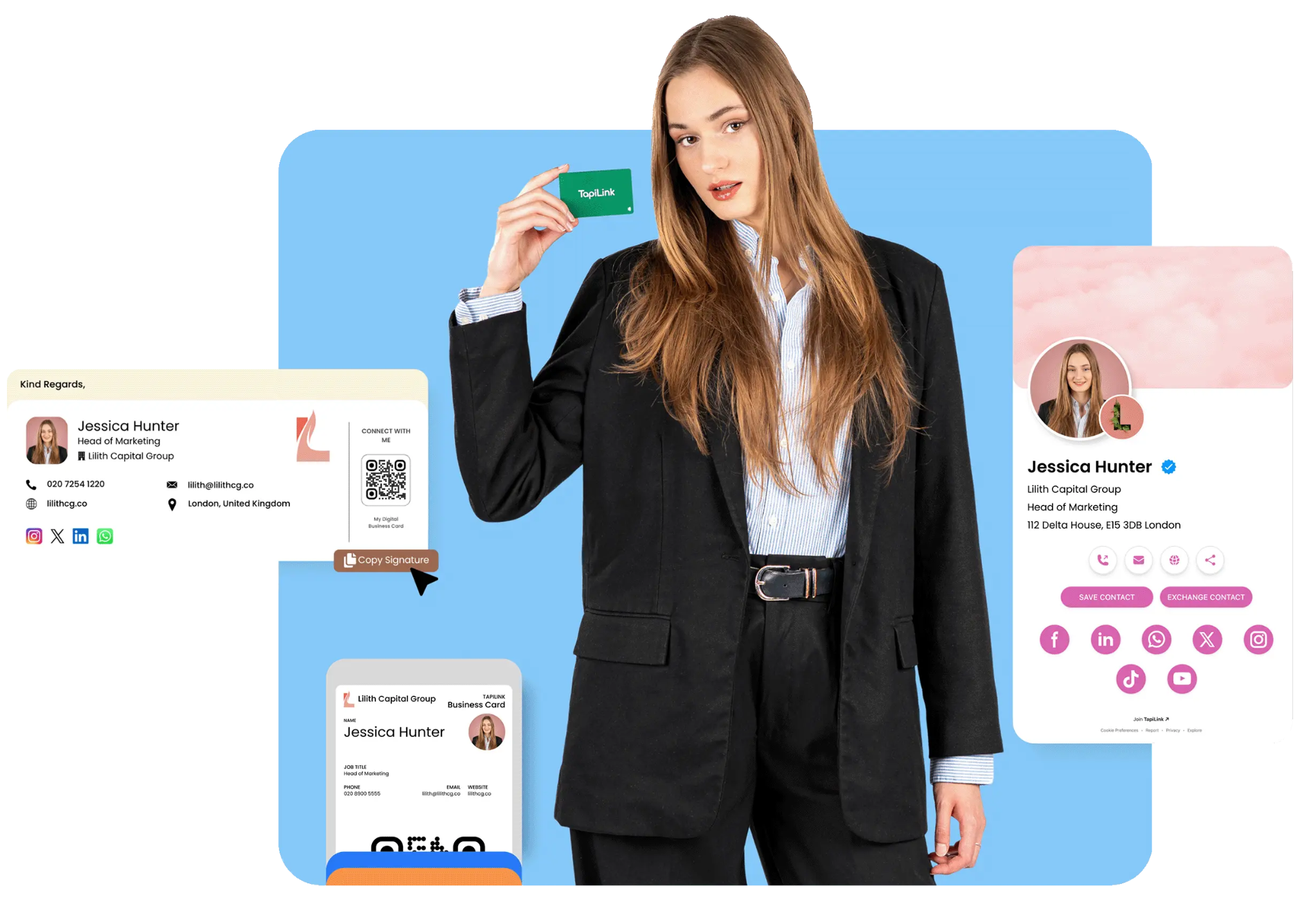
A digital business card is an electronic version of a traditional business card that allows someone to access your professional information through a smartphone or another connected device.
Depending on the platform, your digital profile may contain:
- Your name
- Job title
- Company name
- Phone number
- Email address
- Website
- Profile photograph
- Company logo
- LinkedIn profile
- Social media links
- Portfolio
- Booking link
- Product or service pages
- Videos
- Contact-saving options
Unlike a printed card, the information is not permanently fixed to one piece of paper.
Modern digital business cards can give professionals a central profile that is easy to share while allowing important information to be updated as their role, company, contact details, or online presence changes.
This makes the format useful for far more than simply replacing a printed name and telephone number.
How Do Digital Business Cards Work?
There are several ways to share a digital business card.
One of the simplest is through a link. You send someone your profile URL, and they open it on their device.
Another common method is a QR code. The other person scans the code using their smartphone camera and is taken directly to the digital profile.
A third option uses Near Field Communication, better known as NFC.
With NFC business cards, the card contains an NFC chip that can trigger the digital profile when placed close to a compatible smartphone. Instead of manually typing contact information or searching for someone’s social profile, the recipient can access the relevant information through a quick interaction.
The physical card therefore becomes an entry point to a much richer digital profile.
This combination of physical and digital networking is one reason smart business cards have become useful across sales, recruitment, property, hospitality, events, consulting, creative industries, and many other professional environments.
1. Your Contact Information Can Stay Up to Date
One of the biggest practical advantages of digital business cards is editability.
Consider what happens with printed cards when:
- You change your mobile number
- Your job title changes
- Your website gets a new URL
- You change employer
- Your company rebrands
- Your office moves
- You create a new booking page
- Your main social profile changes
With traditional cards, previously printed information remains the same.
A digital profile gives you the flexibility to update the information associated with your card.
This can be particularly valuable for professionals whose contact details, responsibilities, or services evolve over time.
The card or profile you shared previously can continue directing people toward your current information rather than becoming outdated as quickly.
2. You Can Share More Than Basic Contact Details
A traditional business card has limited space.
Usually, it includes a name, title, company, telephone number, email address, website, logo, and perhaps one or two social media handles.
A digital card can provide much more.
For example, a consultant might include:
- Contact information
- Appointment booking
- Company website
- Case studies
A photographer might include:
- Contact information
- Portfolio
- Booking page
- Recent projects
An estate agent might include:
- Phone and email
- Agency website
- Property listings
- Social profiles
- Appointment booking
A salesperson might share:
- Contact details
- Product catalogue
- Company website
- Demo booking page
This turns the business card into more than an identity card.
It becomes a small digital gateway to the person’s wider professional presence.
3. Contact Sharing Becomes Faster
Networking often happens quickly.
You may meet someone:
- At an exhibition
- During a conference
- At a networking breakfast
- In a shop
- During a client meeting
- At an industry event
- At a trade show
- During an informal introduction
In many of these situations, there is only a short amount of time to exchange details.
Digital cards reduce the number of steps involved.
Instead of asking someone to manually enter your name, number, email address, website, and LinkedIn profile, you can direct them to one profile where those details are already organised.
QR codes and NFC can make this process even faster.
The result is a networking experience that fits naturally with how people already use their smartphones.
4. Digital Cards Can Make Follow-Up Easier
Exchanging a business card is only the beginning of networking.
The real value usually comes afterward.
Will the other person remember you?
Can they easily find the information they need?
Can they contact you without searching through multiple platforms?
A well-structured digital profile can make these next steps simpler.
For example, someone might:
- Save your phone number
- Send an email
- Connect on LinkedIn
- Visit your website
- Book a consultation
- View your portfolio
- Follow your social account
All of those actions can potentially begin from the same profile.
That can reduce friction between the initial introduction and the next meaningful interaction.
For sales professionals and business owners, this matters because successful networking is not about collecting the greatest number of contacts. It is about making it easier for useful conversations to continue.
5. They Can Strengthen Your Professional Image
First impressions still matter.
The way you introduce your business, display your branding, and share your information all contribute to how people perceive you.
Digital business cards can provide a polished experience because the recipient interacts directly with a branded professional profile.
Depending on the solution being used, a profile may include:
- A professional photograph
- Company branding
- Custom colours
- Business logo
- Social links
- Services
- Portfolio content
- Calls to action
For client-facing roles, the presentation can become part of the networking experience itself.
A business card is no longer simply something handed over at the end of a conversation. It can become an interactive extension of the professional or company brand.
6. They Are Useful for Events and Conferences
Events are one of the environments where digital business cards make the most sense.
Think about a typical trade show or conference.
You might meet dozens of people in a single day. Keeping track of printed cards can quickly become inconvenient, and manually adding every new contact to a phone takes additional time.
With a digital card, the exchange can happen immediately.
The same principle works for:
- Exhibitors
- Conference attendees
- Speakers
- Sales teams
- Recruiters
- Event organisers
- Business owners
- Consultants
Professionals can share one profile repeatedly without needing to carry a large supply of printed cards.
A QR code can also be displayed on event materials, badges, signs, presentations, or other relevant touchpoints, giving attendees another way to connect.
7. They Can Support Personal Branding
Personal branding is increasingly important for professionals whose reputation extends beyond their company title.
Freelancers, consultants, designers, marketers, photographers, speakers, coaches, creators, and entrepreneurs often maintain several online destinations.
Someone may have:
- A personal website
- YouTube
- Portfolio
- Newsletter
- Booking calendar
- Online store
Giving a new contact five different URLs is not practical.
A digital business card can act as the central point connecting those destinations.
This makes it particularly useful for professionals whose online presence plays an important role in generating opportunities.
Instead of deciding which individual link to share every time, you can provide one professional profile and let the recipient choose what is relevant to them.
8. Businesses Can Create a More Consistent Networking Experience
Digital business cards are not only useful for individuals.
They can also make sense for teams.
Imagine a company with 20, 50, or 100 customer-facing employees.
With traditional cards, different employees may eventually have cards containing different designs, older branding, outdated contact information, or inconsistent messaging.
A digital system can provide greater consistency across the organisation.
Companies can create standardised approaches to:
- Brand presentation
- Profile layouts
- Contact details
- Company links
- Calls to action
- Social channels
- Employee information
Employees can still have their own names, roles, contact information, and profiles while representing the same wider brand.
This can be especially valuable for:
- Sales teams
- Estate agencies
- Recruitment firms
- Consultants
- Agencies
- Automotive businesses
- Hospitality teams
- Property companies
- Professional services
The larger the team, the more useful standardisation can become.
9. They Can Reduce Dependence on Reprinting
Printed business cards are designed around static information.
When that information changes, new cards may be required.
That can happen after a promotion, company move, rebrand, department change, phone-number change, or even a small correction.
Digital information can be updated without necessarily recreating the physical networking tool.
For businesses with multiple employees, this flexibility can simplify ongoing card management.
There is also a sustainability consideration.
Traditional networking often involves printing large quantities of cards, some of which may never be used or may contain outdated information before the full batch is distributed.
Digital profiles allow businesses to move more of the networking experience online while still retaining the option of a physical NFC card when desired.
10. They Fit Naturally Into Smartphone-Based Communication
Modern business communication already revolves heavily around smartphones.
People use their phones to:
- Send emails
- Make calls
- Visit websites
- Connect on LinkedIn
- Book appointments
- Scan QR codes
- Make contactless payments
- Save tickets
- Manage calendars
- Message businesses
Digital business cards fit naturally into that behaviour.
Instead of transferring information from a physical card into a digital device later, the recipient can access it digitally from the beginning.
That is a small change, but it can make the experience significantly more convenient.
Are Digital Business Cards Better Than Paper Cards?
Neither format needs to disappear completely.
A high-quality traditional business card can still create a strong physical impression, particularly in industries where printed materials are part of the brand experience.
Digital cards, however, provide several capabilities that paper alone cannot easily offer.
| Feature | Digital Business Card | Traditional Paper Card |
| Update contact details | Yes | Requires reprinting |
| Share website links | Directly accessible | Printed URL |
| Share social profiles | Directly accessible | Usually printed |
| QR sharing | Yes | Can be added |
| NFC sharing | Available with NFC card | No |
| Include multiple links | Easy | Limited by space |
| Contact saving | Can be simplified | Usually manual |
| Reusable | Yes | Each card is handed away |
| Rich digital profile | Yes | No |
| Physical presentation | Available with NFC card | Yes |
For many professionals, the most effective approach is not necessarily thinking in terms of paper or digital.
An NFC card combines a physical object with a digital destination.
You still have something tangible to present during a meeting, but the actual information exists digitally and can be accessed through the recipient’s smartphone.
Who Benefits Most From Digital Business Cards?
Almost anyone can use one, but certain professionals may see particularly strong benefits.
Sales Professionals
Salespeople meet prospects regularly and need an easy way to continue conversations after the initial interaction.
A digital profile can place contact details, company information, LinkedIn, and relevant business links in one location.
Estate Agents
Estate agents frequently meet buyers, sellers, landlords, tenants, developers, and other professionals.
A digital card can connect those contacts directly with the agent’s details and online presence.
Freelancers and Consultants
Independent professionals often rely heavily on personal branding.
A digital profile can combine a portfolio, contact information, website, social presence, and booking options.
Recruiters
Recruiters attend events, meet candidates, speak with employers, and build large professional networks.
Fast contact sharing can make those interactions easier to continue.
Business Owners
Owners often represent the business wherever they go.
Having a digital card ready makes it easy to provide customers, suppliers, potential partners, and other professionals with relevant information.
Creatives
Designers, photographers, videographers, artists, and content creators can use their digital profiles to direct contacts toward portfolios and social channels rather than fitting everything onto a printed card.
Teams
Companies with multiple customer-facing employees can use digital profiles to create a more consistent approach to networking across the organisation.
Digital Business Cards Can Extend Beyond Networking
The same contactless technologies used for business cards can support other parts of the customer journey.
One good example is customer reviews.
For a local business, receiving positive feedback is valuable, but customers may not always want to search for the business, find the correct profile, locate the review section, and then return later to leave feedback.
Tools such as Google review cards can shorten that journey by giving customers a convenient NFC or QR-based route to the relevant review destination.
This can be particularly useful in customer-facing environments such as:
- Restaurants
- Cafés
- Salons
- Barbers
- Clinics
- Automotive businesses
- Retail shops
- Hotels
- Trades
- Professional services
It demonstrates a wider point about NFC technology: the value is not simply in the card itself. The value comes from reducing the number of steps between a real-world interaction and the digital action you want someone to take.
For networking, that action may be saving contact information.
For customer experience, it may be leaving a review.
For another business, it could be visiting a website, booking an appointment, or viewing a service.
What Should You Look for in a Digital Business Card?
If you are considering using one, do not focus only on the appearance of the physical card.
The digital experience matters just as much.
Look for features such as:
Easy Profile Updates
You should be able to change important contact information without unnecessary complexity.
Multiple Sharing Options
NFC, QR codes, and profile links provide flexibility in different networking situations.
Professional Customisation
Your digital presence should reflect your personal or company branding.
Contact-Saving Options
The recipient should be able to act on your information easily rather than simply viewing it.
Mobile-Friendly Profiles
Most people will open the profile on a smartphone, so the experience should be designed around mobile use.
Useful Calls to Action
The card should help people do something useful-call, email, visit, connect, book, or learn more.
Team Management
Businesses purchasing cards for multiple employees should consider how easy it is to maintain profiles and brand consistency.
Lead Management
For sales-focused teams, features that help capture and organise contacts can add another layer of value to networking.
Are Digital Business Cards Worth the Investment?
For professionals who rarely exchange contact details, the difference may be relatively small.
For people who network frequently, however, the value becomes much clearer.
A digital card can help you:
- Share details quickly
- Keep information current
- Present more than basic contact information
- Connect people with your wider online presence
- Create a more professional networking experience
- Reduce repeated card printing
- Support events and conferences
- Improve team consistency
- Make post-meeting follow-up easier
The question therefore should not simply be:
“Is a digital business card better than paper?”
A better question is:
“Does a digital business card make my networking process easier and more useful?”
For many modern professionals, the answer is yes.
Final Thoughts
Digital business cards are worth considering because they solve several practical limitations of traditional networking.
They allow professionals to share more information, update that information when needed, connect people directly with digital channels, and make the transition from an in-person conversation to an online connection much smoother.
NFC and QR technology make the process particularly convenient because people are already comfortable using their smartphones to interact with the world around them.
The strongest benefit, however, is not simply that digital cards feel modern.
It is that they can make networking more actionable.
A successful introduction should make it easy for the other person to remember who you are, find your information, connect with you, and continue the conversation. When a digital business card helps achieve those goals with fewer steps, it becomes more than an alternative to paper-it becomes a practical networking tool for today’s professional world.
