



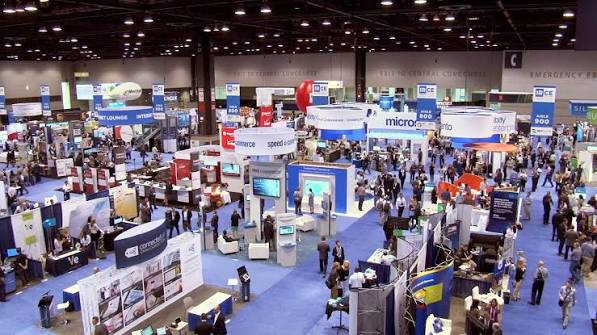
Exhibition businesses run trade shows that repeat on a fixed cycle, usually once a year in the same city and often in the same hall. Each edition sells floor space to companies that want to meet buyers in their sector, and the same exhibitors tend to return because their customers do. That repetition is what makes the sector interesting to investors who hold assets for years rather than quarters.
The appeal rests on how the revenue arrives rather than on the size of the market. Bookings are taken well ahead, deposits are paid early, and a show that has run for two decades carries a bank of relationships no new entrant can simply buy. Working out where that money comes from, and what could interrupt it, is the starting point for anyone assessing the sector.
Revenue that is visible a long way ahead
Space for next year’s edition is often sold on site during this year’s show, which means a large share of income is contracted before the financial year begins. Informa told the market that around 80% of targeted revenue was already committed or visible at the halfway point of 2026. Forward visibility on that scale is unusual outside subscription businesses, and it changes how the company can be financed and planned.
How a calendar of shows is actually run
Most portfolios of any size sit with a specialist operator rather than with the owner, because running a show has more in common with running a small business than with holding an asset. Exhibition portfolio management agency services cover the sales cycle, the floor plan, the marketing, the supplier contracts and the visitor data that decides whether next year sells. An event portfolio management agency is usually judged on a short list of measures:
- rebooking rates among exhibitors who attended the last edition
- yield per square metre rather than total floor space sold
- visitor quality measured against what exhibitors came for
- how quickly a weakening show is repositioned or dropped
What protects an established show
Barriers here are commercial rather than legal, and they hold up well. Venue slots in the main halls are booked years ahead, the leading event in a sector absorbs most of the budget available, and exhibitors are reluctant to test an unproven rival while their competitors are all gathered in one room. Recovery once venues reopened after the shutdowns was quick enough to lift organisers’ revenue forecasts, which said something useful about how durable those relationships are.
What can interrupt the cycle
Risk in this sector is concentrated rather than constant. A venue closure, a travel restriction or the loss of a sector’s largest exhibitor can remove an edition’s revenue at short notice, and a missed year is hard to recover because the momentum belongs to the community rather than the brand. Costs move too, since venue hire, stand build and staffing have all risen and are difficult to pass on in full.
Judged over a long horizon, the attraction is a business where next year’s customers are largely known and already booked. Anyone weighing one up is really assessing a few individual shows, their standing in their sectors and the quality of the team behind them, rather than the industry as a whole.
