



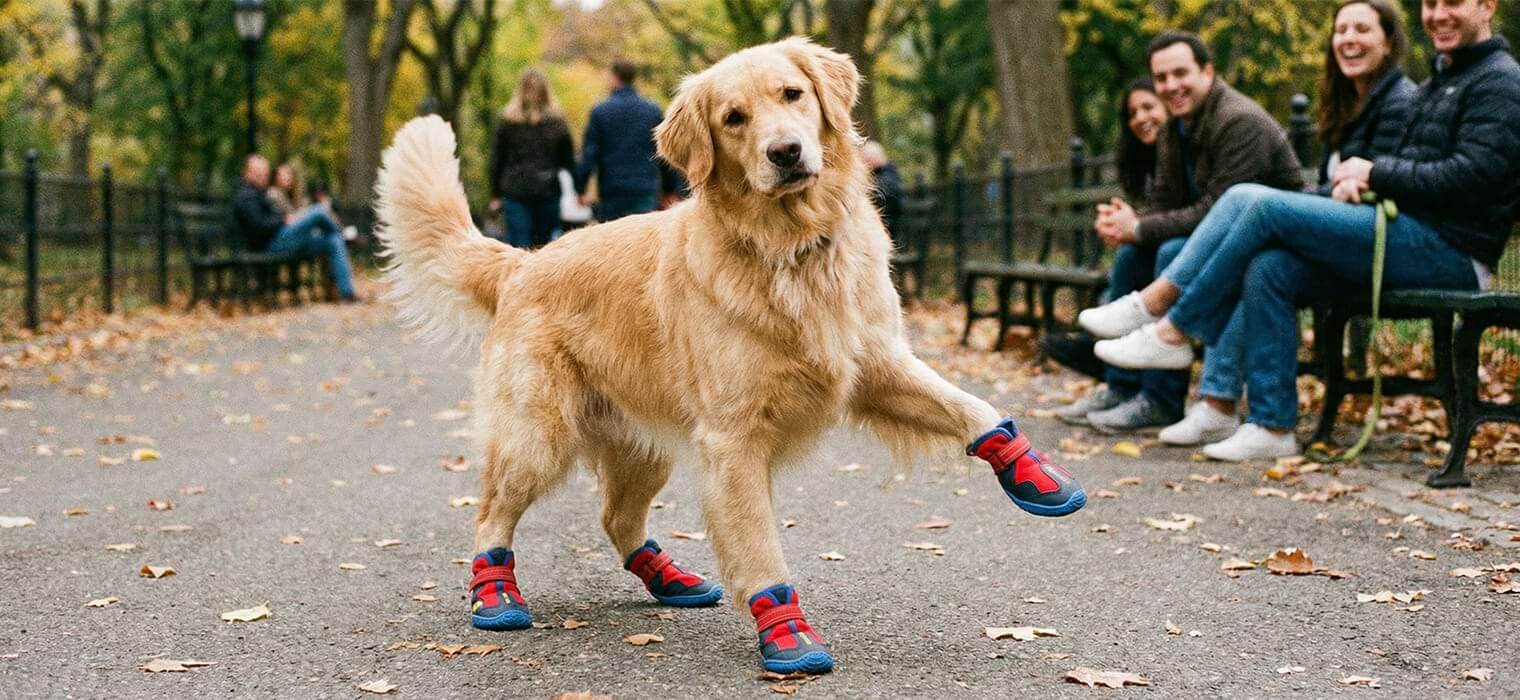
When you see a video of a dog wearing boots for the first time, it’s hard not to chuckle at their high-stepping, awkward dance. This often leads loving pet owners to ask a serious question: Are dog shoes actually good for dogs, or are they just a funny accessory? The answer is more complex than a simple yes or no. While not every dog needs shoes for every walk, in certain situations, they are an essential piece of safety gear.
This guide will walk you through the real benefits of dog shoes, debunk common myths, and explain when paw protection is not just a good idea, but a necessity. We will cover why that “funny walk” happens, how to protect your dog in extreme weather, and what to look for when choosing the perfect pair of boots for your best friend.
Understanding the “Boot Dance”: Proprioception vs. Pain
Let’s start with the most common concern: the strange way dogs walk when they first wear shoes. Many owners see this and worry the boots are causing discomfort or pain. In reality, this reaction is a matter of brain science, not physical hurt. It all comes down to a concept called proprioception.
Proprioception is your dog’s ability to sense where its body parts are in space without looking. Their paw pads are packed with nerves that send constant information to the brain about the texture, angle, and type of surface they are walking on. When you put shoes on your dog, you temporarily block this direct sensory feedback.
The dog’s brain, suddenly unable to feel the ground, gets confused. It might interpret the lack of sensation as stepping into something soft or uneven, like deep mud or tall grass. In response, the dog lifts its paws higher than usual to clear this imaginary obstacle. This is the “boot dance.” It’s similar to how you might walk differently when trying on heavy snow boots for the first time. The good news is that for most dogs, this confusion fades within about 15 minutes as their brain adapts to the new feeling.
When Are Dog Shoes a Medical Necessity? 3 Critical Scenarios
Once you understand that the initial awkwardness is temporary, you can focus on the real purpose of dog shoes: protection. In some environments, going without paw protection can lead to serious injuries and emergency vet visits.
1. Summer Heat and the 7-Second Rule
A pleasant summer day can be deceptive. While the air temperature might feel comfortable, asphalt and pavement absorb and retain a tremendous amount of heat. A surface that is too hot can cause painful burns on a dog’s sensitive paw pads in less than a minute.
This is where the “7-Second Rule” becomes a crucial safety check. Before your walk, place the back of your hand on the pavement. If you cannot comfortably hold it there for seven seconds, it is too hot for your dog to walk on without protection. Dog shoes designed for hot pavement create a vital barrier, reflecting heat and allowing your dog to walk safely without the risk of blisters or burns.
2. Winter Dangers: Ice, Salt, and Chemicals
Winter presents a triple threat to your dog’s paws. The most obvious danger is the cold itself, but the risks go far beyond that. Sharp ice shards hidden under a layer of snow can easily slice through paw pads, causing painful cuts.
However, the most insidious danger is the de-icing salt and chemicals used to melt snow and ice on sidewalks and roads. These substances can cause chemical burns on contact. Worse yet, dogs often lick their paws after a walk to clean them, ingesting these toxic materials. This can lead to drooling, vomiting, and serious internal issues. Dog boots for snow create a waterproof shield, keeping paws dry, warm, and safe from both sharp objects and harmful chemicals.
3. Support for Senior Dogs
The conversation about dog shoes isn’t limited to outdoor adventures. For senior dogs, paw protection can dramatically improve their quality of life indoors. Many older dogs suffer from conditions like osteoarthritis, which affects their stability and strength. Slippery indoor surfaces like hardwood, tile, or laminate floors can become a major challenge.
These dogs often experience “micro-slips,” where their paws slide slightly with each step. To compensate, they constantly tense their muscles, which leads to fatigue and aggravates joint pain. Non-slip dog socks or lightweight indoor boots provide the traction needed to stand up, walk confidently, and navigate the house with less strain. For a senior dog, this added stability can be the key to maintaining mobility and independence.
Will Shoes Hurt My Dog’s Joints? The “Fold Test”
A valid concern is whether wearing shoes long-term could alter a dog’s natural gait and lead to joint problems. The answer depends entirely on the type of shoe you choose. Badly designed shoes can cause harm, but good ones will support natural movement.
The primary issue comes from boots with thick, rigid soles, similar to a human sneaker. A dog’s paw is designed to flex and spread to grip the ground and maintain balance. A stiff sole locks the paw into a flat, unnatural position. This forces the dog to change its stride, which can shift stress up to the ankle, knee, and hip joints.
To avoid this, you should always choose a flexible shoe. A simple way to check for safety is with the Fold Test. A well-designed dog boot should be so flexible that you can easily bend it and roll it up with just two fingers. If the sole is too stiff for you to bend easily, it will definitely be too rigid for your dog’s paw to move naturally. Look for a boot that acts like a protective skin, not a restrictive cast.
How to Get Your Dog to Love Their Boots
Even with the perfect pair of shoes, you can’t just strap them on and head out for a hike. A gradual introduction is key to helping your dog accept their new footwear without stress.
- Positive Association: Start by simply leaving the new boots near your dog’s food bowl or favorite toys. Let them sniff and investigate the boots on their own terms. Reward them with a treat for calmly being near the boots. This helps them learn that boots are associated with good things.
- One Boot at a Time: Once your dog is comfortable with the boots being around, put a single boot on one of their front paws. The moment it’s on, give them a high-value treat (something they really love). Then, take the boot off immediately. Repeat this process over several sessions, alternating paws. The goal is to make the act of putting a boot on a positive and brief experience.
- Distract and Move: When your dog is comfortable wearing single boots for short periods, it’s time to try all four. Put them on quickly and immediately engage your dog in an activity they love. Throw a ball in the yard, grab their leash for a walk, or start a fun training session. The excitement of the activity will distract them from the new sensation on their feet, helping them forget they are even wearing them.
By following these steps, you can turn footwear from a source of confusion into a normal part of your adventure routine.
The Verdict: Safety Is the Goal
So, are dog shoes good for dogs? When used thoughtfully and for the right reasons, they are an invaluable tool for keeping your pet safe, comfortable, and active. They provide essential protection from environmental hazards like scorching pavement and toxic ice melt, and they can offer life-changing support for senior dogs.
The key is to view them not as a fashion accessory, but as functional safety gear. By choosing a flexible, well-fitting shoe and introducing it properly, you can ensure that nothing stops you and your best friend from exploring the world together, no matter the weather
